























Liveness probe. GET /health answers publicly on api.carvector.io with nothing but a status and a timestamp — no version, no build id, no dependency status, no row counts. It sits outside the paywall and outside key authentication on purpose, so a monitor polling it every minute can never book an authentication failure against your account. It is deliberately boring: a health check that is also reconnaissance is worse than none.
One call. A complete vehicle profile.
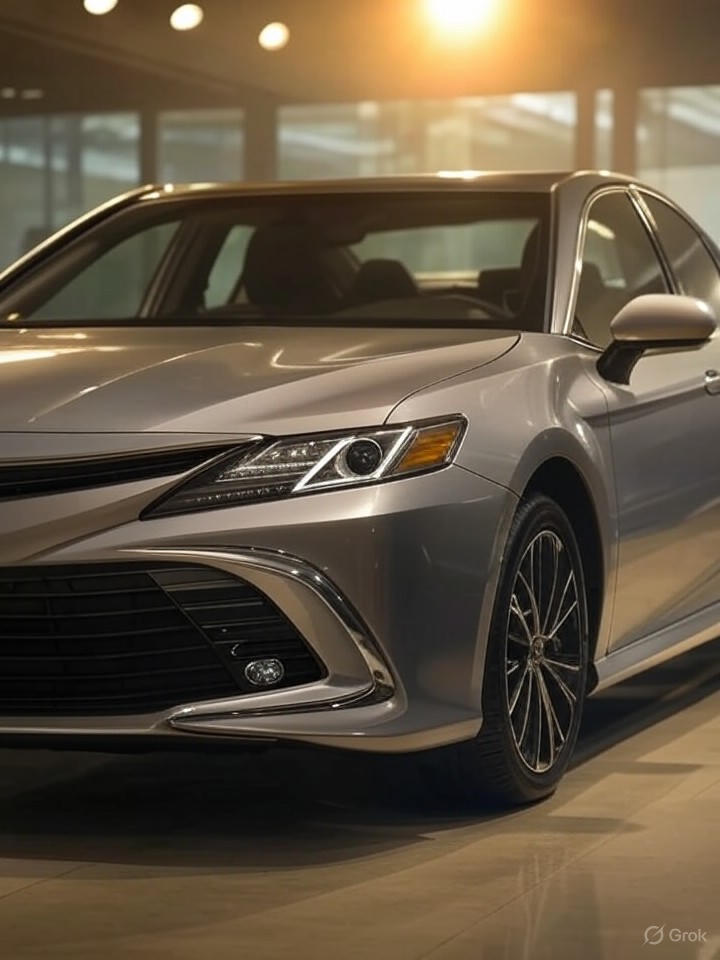
This card is populated live from a single CarVector request — image, specs, and federal recall count, with no scraping and no stitching five sources together. Ship a vehicle profile this afternoon.
Most car APIs give you a spec sheet. That's where they stop.
You get year/make/model and a horsepower number — no image, no recall history, no diagnostic reference. CarVector bundles the data developers actually reach for, in one call and one key.
Specs + images
A growing catalog of vehicles by year, make, model, and trim — with representative illustrations, because a spec sheet with no picture isn’t much of a product.
Learn moreRecalls + failure data
Federal recalls, owner complaints, technical service bulletins, and defect investigations — the full safety and failure history, mapped to vehicles and refreshed automatically. The history most vehicle APIs make you go find yourself.
Learn moreDTC reference
A growing library of diagnostic trouble codes with titles, categories, severity ratings, and safety flags. Look up any check-engine code by its identifier.
Learn moreThe vehicle data API that doesn't stop at specs.
Specs and representative images, complete federal recall data, and a growing DTC reference — bundled in one API at a flat monthly, not per-seat. Start free.
Explore the API$ ▍
{ "id": "1laqdklflb3hfav", "year": 2018, "make": "Toyota", "model": "Tacoma Access Cab", "horsepower": 278, "displacement_l": 3.5, "transmission": "Automatic 6-spd", "drive_type": "4x2", "image_type": "illustration", "recall_count": 0 }
We log every correction. Here is one.
Tens of thousands of corrections and counting — each one a data point a single-source database gets wrong.
Your AI agent can't call legacy desktop software. It can call us.
Drop CarVector into Claude, Cursor, or any MCP client and your agent queries real vehicle data — specs, recalls, and DTC reference — instead of hallucinating it. One config block, your key, four tools.
{
"mcpServers": {
"carvector": {
"command": "npx",
"args": [
"-y",
"carvector-mcp"
],
"env": {
"CARVECTOR_API_KEY": "cv_your_key"
}
}
}
}By the numbers
- vehicles spanning 1925–2029
- 12,000+vehicles spanning1925–2029Browse them →
- federal recall campaigns mapped to year/make/model
- 48,000+federal recall campaignsmapped to year/make/model
- DTC codes with severity and safety flags
- 1,200+DTC codes with severityand safety flags
- verified corrections shipped
- 80,000+verified correctionsshipped
Last data refresh: 6 hours ago
We ship every week
See the full changelogPay-per-call is live on Base mainnet. You no longer need an account to buy data. An API call without a key now returns HTTP 402 with a signed price quote instead of a rejection — $0.01 in USDC on Base, quoted as 10,000 atomic units against the token's own EIP-712 domain so your wallet can verify what it is signing. Pay the quote, repeat the call with the payment attached, and the data comes back. Seven endpoints are priced this way: /v1/vehicles, /v1/vehicles/{id}, and that vehicle's /recalls, /tsbs, /complaints and /investigations, plus /v1/dtc/{code}. Quotes hold for 60 seconds. Every settled payment returns the payer their own receipt, and one payment buys exactly one call — replay protection is enforced at the ledger with a unique index, not by a time window, because a window alone was half a fix and we measured it.
The payment rail, built and deliberately switched off. Verification, settlement and serving all worked end to end before the flag was ever turned on, against testnet first and with the ledger reconciled after every round trip. Three things were wrong in the wire format and one of them was fatal, which is the argument for shipping it dark. We also taught the intrusion alarm what an attack looks like once payments exist: before this, a request with no API key was a probe, and afterwards it is the ordinary opening move of a paying customer. Counting those as attacks would have paged us about roughly a hundred customers per fifteen minutes. Key-guessing is still counted; arriving without a key is not.
Stop overpaying for data that's missing half the picture.
The sweet spot for production apps.
Five tiers in all, including Enterprise. Full pricing
Picks and shovels for the auto repair gold rush.
Shop management SaaS
Building the next shop platform? Get specs, recalls, and DTC reference via API for a flat monthly instead of licensing legacy databases at hundreds per seat.
Learn moreInsurance & claims
Pull recall exposure and decode trouble codes at intake from the year/make/model. Structured data, not phone calls.
Learn moreFleet maintenance
Map open recall exposure across your fleet from each vehicle’s year/make/model. Know what’s outstanding before it’s a roadside breakdown.
Learn moreAI agents & copilots
Give your agent structured automotive knowledge through MCP. No hallucinated specs or recalls — real data, real sources.
Learn moreOn the roadmap
What we're building next.
Maintenance procedures
β · pilot in flightReset sequences, TPMS relearns, service light walkthroughs — derived from real shop content, not from manuals nobody publishes.
70 of 70 pilot vehicles cached
VIN decode + enrichment
Q3 2026Paste a 17-character VIN, get back the decoded year, make, model, body class, and engine — joined to the matching catalog row's image and recall history. One call, complete picture.
Expanded procedure library
Q4 2026Scaling from 3 procedure types (oil reset, TPMS, service reminder) to 10+ — covering key fob programming, throttle relearn, steering angle reset, and more. Coverage grows weekly.
Specs, images, recalls, codes. One API, one key.
Free tier. No credit card.
Not ready for a key? Browse the vehicle guide — every page is real data from the same API.


